
✅ How the communications function is balancing political signals, cultural movements and market pressures on DEI
A strategic communications framework for navigating political and cultural dynamics
We're witnessing a remarkable retreat from corporate diversity commitments that reveals a fundamental truth: political capital, while derived from cultural movements and public sentiment, is a decisive force in institutional behaviour.
Successful politicians harness cultural currents, transforming social attitudes into concentrated political power. However, once in power, financial backers can override public sentiment. Organisations faced with political dictates and legislative change have little option but to follow suit.
The evidence is striking. According to The Financial Times this week, approximately 90% of S&P 500 companies have now gone silent or scaled back their diversity commitments following the political transition in Washington.
Even Larry Fink, CEO of BlackRock and long recognised as an advocate for diversity within portfolio companies over the past decade, notably avoided the topic entirely in his annual shareholder letter this year.
The political realignment led by President Trump and the Republican Party has effectively given companies tacit permission to step back from diversity programmes. It’s a green light for any organisation that doesn’t have diversity as a value to withdraw investment.
The interplay between financial incentives, leadership signals and political capital reshapes corporate priorities at a pace that cultural momentum alone cannot sustain. Political will currently favours the shareholder over the stakeholder, but history shows us that this is cyclical.
There will be a galvanising moment in our social consciousness - similar to how the tragic murder of George Floyd in 2020 sparked widespread calls for racial justice - that generates the overwhelming public sentiment and political pressure needed for change. Climate, socio-economic polarisation and geo-political factors are all currently strong signals.
But until such a catalyst emerges, corporate diversity initiatives will continue to recede as companies follow the path of least resistance and follow the lead of political leadership.
The role of corporate communications at this time is complex and multifaceted. It must navigate the complex and shifting landscape where political signals, cultural movements and market pressures intersect. At Wadds Inc., we’ve been helping management teams through the issue and have developed this framework.
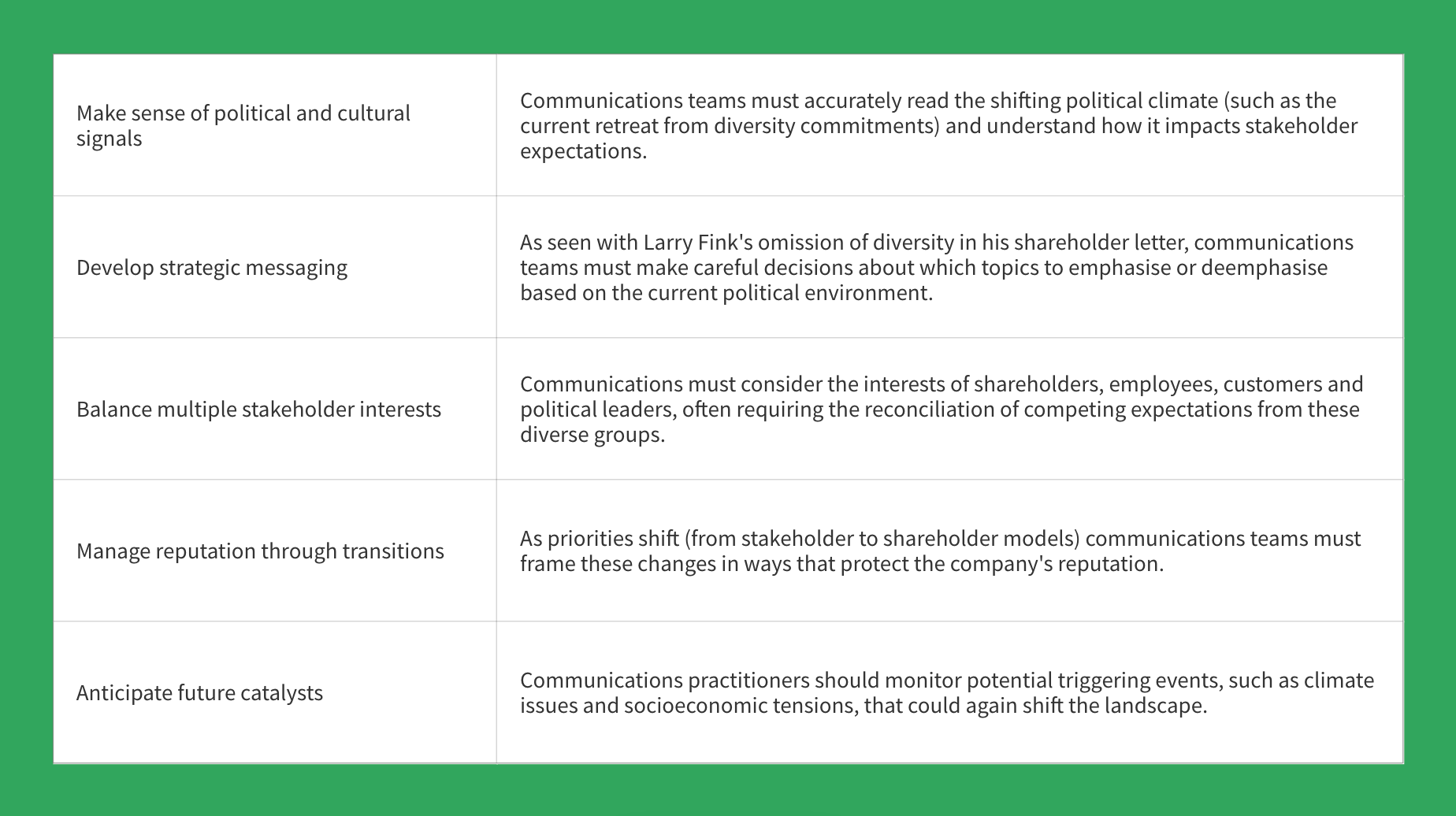
Success requires both tactical agility and strategic foresight in a highly politicised business environment. It's a significant management challenge.
Have a good week ahead.
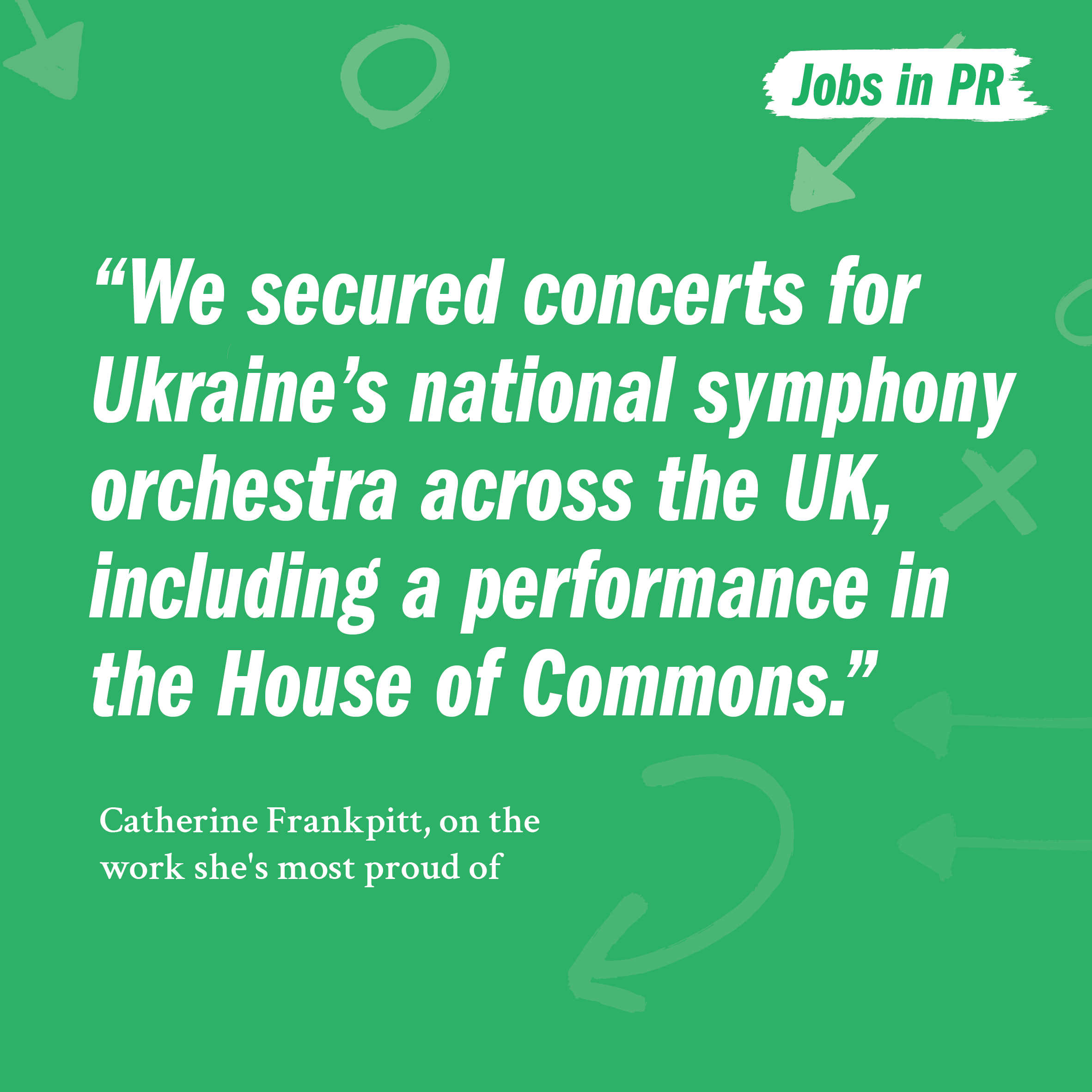
Jobs in PR is a Wadds Inc. data project that tracks job ads in the top 50 UK public relations agencies. We publish a list of jobs each month along with advice for practitioners on how to get ahead. This month is the turn of Strike’s Catherine Frankpitt.
Management
🚨 COMMS CRISIS: NHS England has called on all NHS providers to reduce corporate costs, including communications. The NHS Confederation warns the cuts could leave organisations "underpowered" and lacking strategic communications expertise, with concerns that hasty budget-cutting decisions may undermine future NHS communication capabilities. Source: PR Week.
🏢 BUSINESS COALITION: Leading business organisations have formally appealed to the House of Lords about the Employment Rights Bill, warning it could force businesses to choose between jobs, investment and growth. Their letter urges peers to scrutinise the legislation's impact on hiring practices, flexible work arrangements, dismissal processes, union powers and sick pay liabilities. Source: IoD.
🔍 INDIE POWERHOUSE: Independent agencies represent 99% of all UK creative, communications, marketing and media agencies, operating outside the Big Seven global networks. Together, these 25,320 independent agencies employ 233,000 people, generating £26.7 billion in turnover for the UK economy, which accounts for nearly 9 in 10 sector jobs and 87% of total economic output. Source: Wadds Inc.
Social media
📱 SELFIE SURGE: Tourists drawn to Instagram-worthy Lake District spots, now top the list of callout recipients. Incidents have risen by a quarter in five years. Visitors seeking social media photos often arrive ill-equipped and over-reliant on mobile phones, struggling particularly on return journeys as they lack proper equipment, maps and preparation for changing weather conditions. Source: BBC.
📉 ENGAGEMENT DECLINE: Meta CEO Mark Zuckerberg admitted in a Federal Trade Commission testimony that time spent on Facebook and Instagram has "gone down meaningfully" as users shift to messaging apps and competitors such as TikTok. TikTok users now spend 108 minutes daily in the app compared to Facebook's 63 minutes and Instagram's 48 minutes, highlighting significant challenges for Meta's core platforms despite their billions of users. Source: Social Media Today.
📈 LINKEDIN ENGAGEMENT: LinkedIn engagement increased by 30% year-over-year with multi-image posts leading performance at 6.6% engagement rate, followed by native documents (6.1%) and videos (5.6%). Despite brands primarily posting images (31.3%) and links (28.5%), data shows video usage grew 8% and polls surged 55% as companies discover more effective formats. Source: Social Insider.
Media
🔄 HARO REBOOTED: Featured.com has acquired Help A Reporter Out (HARO), reviving the trusted platform where journalists find expert sources and spokespeople gain media exposure. The daily email digests (morning, afternoon and evening editions) are free to journalists and sources. Source: Help a Reporter Out.
🐀 RAT PANIC: The Birmingham bin strike, now in its sixth week, continues to attract national headlines focused on rodents rather than the dispute between the council and unions. The story employs framing (“rats like cats”, “2ft rodent,” and “as wide as a brick") and emotional language, which guarantees headline attention. It creates memorable imagery, keeping the story circulating regardless of the actual scale of the problem. Source: The Mirror.
Artificial intelligence
🪆 DOLL DOUBLES: The social media trend transforming selfies into AI-generated action figures is facing scrutiny despite its playful appeal. While brands and individuals eagerly create miniature versions of themselves through tools such as ChatGPT, experts warn about the significant environmental impact. Critics question whether the novelty justifies the environmental cost and raise concerns about copyright violations and privacy implications. Source: BBC.
🧠 HUMAN LEADERSHIP: While AI offers valuable data-driven insights and workflow efficiencies, successful leadership requires emotional intelligence, trust-building, ethical decision-making and authentic connection. An editorial in Rolling Stone highlights ten considerations for the AI era, including avoiding overreliance on technology, helping teams develop AI skills, maintaining responsibility for final decisions, and recognising that "people follow people, not algorithms." Source: Rolling Stone.
The NHS Confederation is a Wadds Inc. client.
Thanks to Alan Morrison, Lisa Potter, Daniel Reynolds, Sarah Waddington CBE and everyone who shares and debates the stories in the newsletter via our Facebook and LinkedIn communities.
We’re trusted by 4,000+ practitioners seeking clarity on issues such as artificial intelligence, diversity and societal polarisation from a management and communication perspective. We distil news, research and industry developments twice weekly into actionable briefings to help you enhance your work.
Please consider becoming a paying subscriber to support our work if you haven’t already. It would be much appreciated.